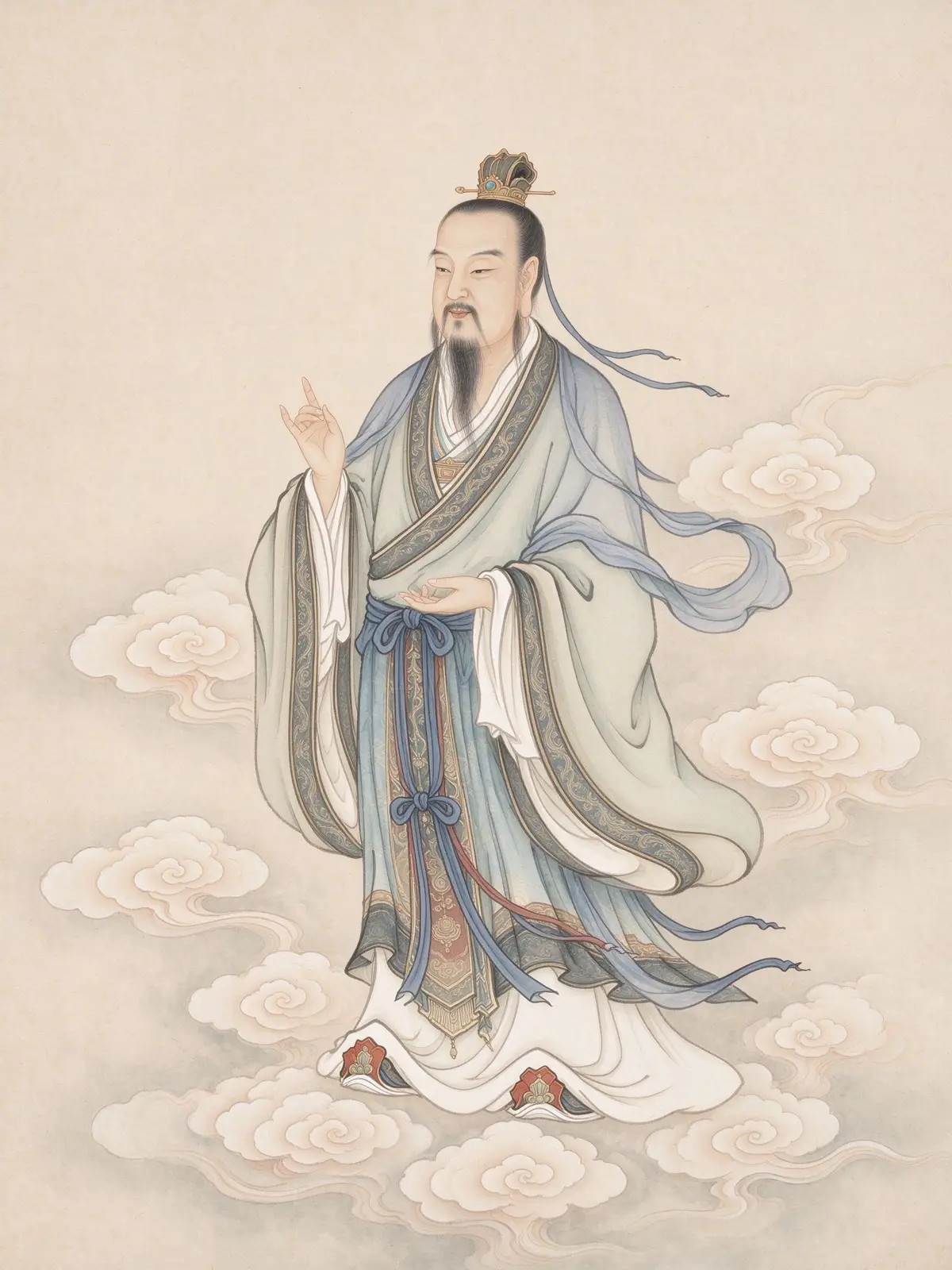
The Pantheon
How the Taoist pantheon took shape, and the meaning and evolution of high deities and folk gods
Coming soonTaoism is a living Chinese tradition shaped by texts, ritual, community, cultivation, and sacred places.
The Tao gave birth to One. One gave birth to Two. Two gave birth to Three. Three gave birth to all things.
— Tao Te Ching, Chapter 42LIVING TRADITION
Taoism is more than the Tao Te Ching or a philosophy of life. It is a living tradition woven from scriptures, belief, temples, ritual, ethics, and community.
We introduce the Zhengyi and Quanzhen schools and other historical lineages, without reducing Taoism to a single sacred mountain or a single "master." Beyond the Tao Te Ching and the Zhuangzi, we open up the wider world of Taoist scripture.
Sources: the Zhengtong Taoist Canon (5,305 volumes) plus the Wanli supplement (180 volumes); temple and clergy figures are approximate, from the white paper China's Policies and Practices on Protecting Freedom of Religious Belief (State Council Information Office, 2018).
ORIGIN
How pre-Qin Taoist thought and Huang-Lao learning, the fangxian tradition, and the Way of the Five Pecks of Rice gave rise to Taoism
Taoism has no single source. From Taoist thought among the pre-Qin philosophers, to Huang-Lao learning in the Warring States and Qin–Han periods, to the fangxian seekers of immortality and the Eastern Han Way of the Five Pecks of Rice, a thread running through a thousand years slowly emerges from the mist of history.
HISTORY
How Taoism developed, changed, and found its place in each era
SECTS
The two main schools, Zhengyi and Quanzhen, and branches such as Longmen, Maoshan, Lingbao, and Qingwei
Taoism has never been monolithic. Zhengyi carries on the tradition of talismans and liturgical offerings, while Quanzhen is known for the dual cultivation of inner nature and life. Longmen, Maoshan, Lingbao, Qingwei and other branches each have their own lineage and character, together forming a rich family of schools.
EXPLORE
From the pantheon to cultural influence: three ways into the world of Taoism
How the Taoist pantheon took shape, and the meaning and evolution of high deities and folk gods
Coming soon
Little-known facts and anecdotes, and the surprising links between Taoism and everyday culture
Coming soon
Taoism's lasting influence on Chinese philosophy, literature, early science, and folk customs
Coming soon